
 Image 1 of 4
 Image 2 of 4
 Image 3 of 4
 Image 4 of 4
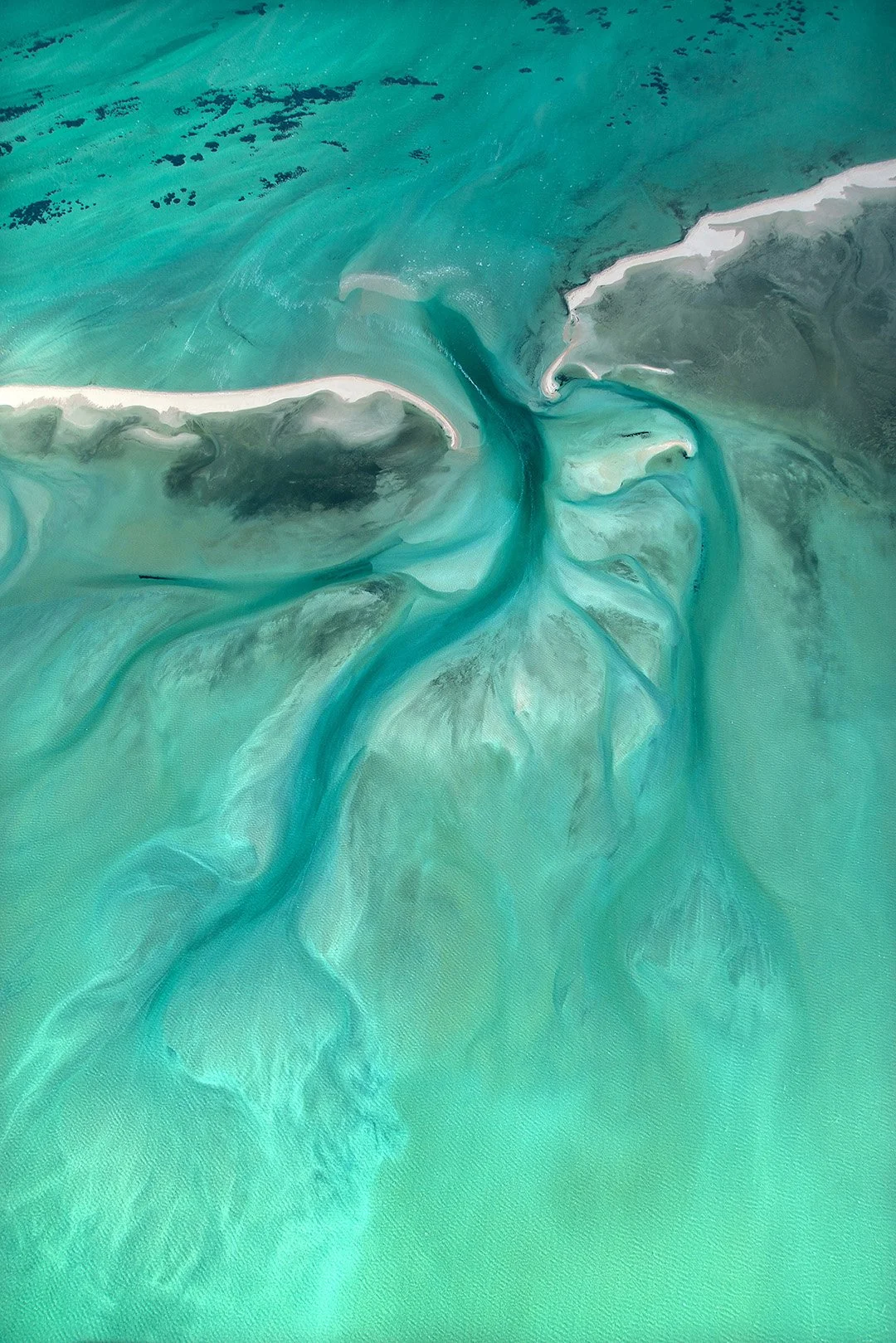
Winds and tides continually sculpt the meeting of sand and sea, shaping formations that shift with the seasons and the light. Tidal currents carve channels through pale sand flats, while prevailing winds comb the dunes into layered ridges and crescent forms. From above, these natural forces trace elegant contours along the coastline — rippling patterns in sand and water that reveal the ever-changing dialogue between ocean and land.
The Shark Bay World Heritage Area is a 2.2-million-hectare, globally significant, and highly biodiverse coastal region in Western Australia listed by UNESCO in 1991 for all four criteria for natural heritage values, including; exceptional natural beauty, significant natural habitats for in-situ conservation of biological diversity, Ongoing processes and evolution, and representations of major stages of earth’s history.
Winds and tides continually sculpt the meeting of sand and sea, shaping formations that shift with the seasons and the light. Tidal currents carve channels through pale sand flats, while prevailing winds comb the dunes into layered ridges and crescent forms. From above, these natural forces trace elegant contours along the coastline — rippling patterns in sand and water that reveal the ever-changing dialogue between ocean and land.
The Shark Bay World Heritage Area is a 2.2-million-hectare, globally significant, and highly biodiverse coastal region in Western Australia listed by UNESCO in 1991 for all four criteria for natural heritage values, including; exceptional natural beauty, significant natural habitats for in-situ conservation of biological diversity, Ongoing processes and evolution, and representations of major stages of earth’s history.